

Information Systems Department Discusses Academic and Organizational Issues
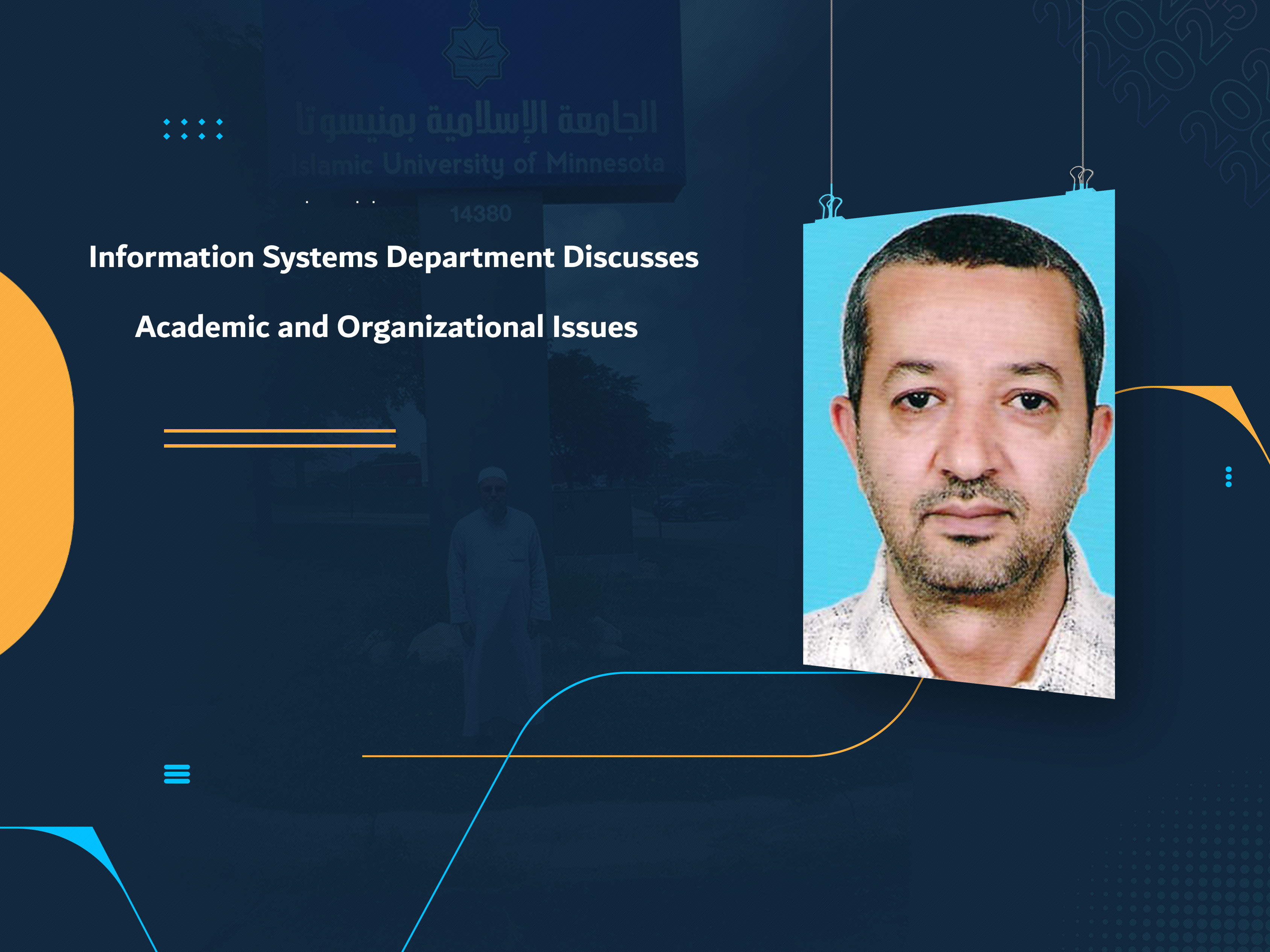
The Information Systems Department at the College of Computers and Information Technology, Islamic University of Minnesota (Main Center), discussed a range of academic and organizational issues during a meeting held on Tuesday evening, December 9, 2025. The meeting was chaired by Dr. Saleh Al-Riyashi, Head of the Department, and attended by faculty members, as part of the department’s ongoing follow-up on the progress of the educational process.
At the outset of the meeting, the Head of the Department commended the efforts exerted by faculty members during the past period, emphasizing that teamwork and adherence to academic quality standards constitute the foundation for improving learning outcomes and ensuring the efficiency of the educational process.
The meeting reviewed academic and organizational performance throughout the semester, stressing the importance of strengthening cooperation among faculty members, adhering to appropriate teaching methods aligned with students’ abilities and needs, and uploading lectures and supporting materials on time without delay. Emphasis was also placed on the regular assignment, grading, and timely entry of academic activities and assessments into the electronic system, while taking individual differences among students into account and providing the necessary support for those facing academic difficulties.
Participants underscored the necessity of continuously recording students’ grades and completing their entry no later than the eleventh week of the semester, with the electronic portal serving as the primary platform for uploading assignments and educational tasks.
The meeting also addressed early preparations for midterm examinations, the importance of faculty availability to support students and respond to their inquiries, and adherence to uploading exam questions in accordance with the procedures approved by the College Examination Committee. Reviewing exam questions within the system to ensure accuracy and eliminate errors was likewise emphasized.
Discussions further covered mechanisms for preparing exam models, highlighting the need for clear wording, avoiding multiple correct answers, and ensuring gradual progression and comprehensive coverage. Faculty were also advised to inform the Examination Committee of courses that do not include written exams and to clarify alternative assessment methods such as projects, presentations, or case studies. The department additionally stressed the importance of clearly explaining assessment methods to students from the beginning of each course and adhering to the full allotted lecture time.
The department discussed a proposal to submit a formal recommendation to adopt a flexible exam duration, calculated as one hour per student from the time of entry within the approved exam period, with questions displayed gradually, in order to enhance fairness in assessment and ensure procedural control.
The meeting further emphasized the importance of maintaining continuous communication between the department and faculty members, coordinating with course coordinators and related departments, and following up on the needs of newly appointed faculty members by providing them with the necessary academic support.
At the conclusion of the meeting, a plan was approved to monitor academic performance during the remainder of the semester and address previous observations. The department also opened nominations for faculty members interested in supervising postgraduate (PhD) students, with applications to be reviewed and supervision assignments approved based on specialization.
In closing, the Head of the Department expressed his appreciation to the attendees for their active participation, affirming that collective commitment and continuous coordination represent the optimal path toward enhancing the quality of academic programs and achieving institutional excellence.
